

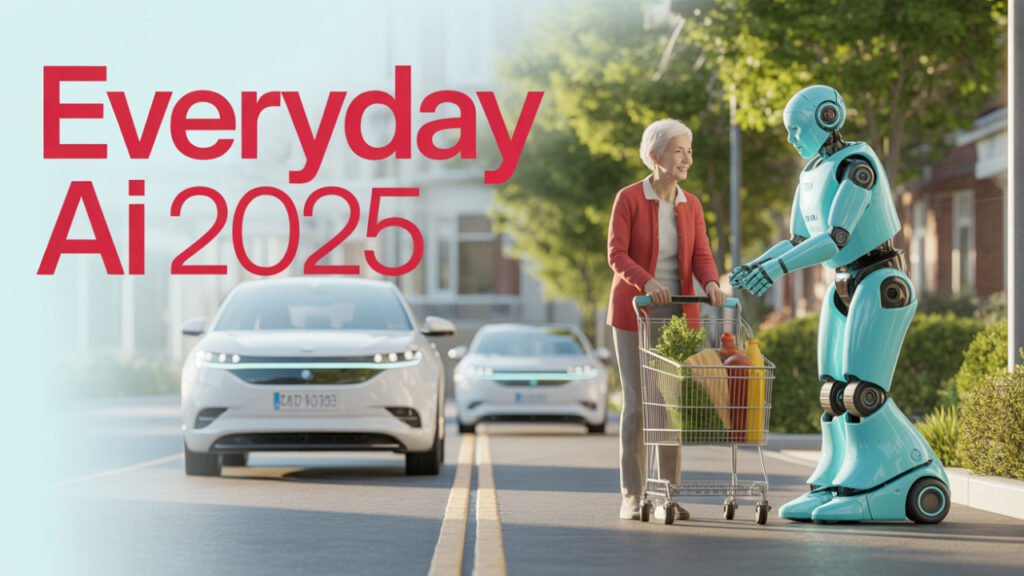
Have you ever noticed how your Spotify playlist seems to know your mood, or how your smartwatch nudges you just as you’re about to settle into the couch? That’s not coincidence—it’s Everyday AI 2025 at work.
Artificial intelligence is no longer just powering robots or complex tech labs. It’s guiding the games we play, the way we exercise, and even how we organise our daily routines. From smarter video games that adapt to your skills, to apps that act like personal trainers, AI is becoming the invisible assistant we didn’t know we needed.
In this post, we’ll explore how Everyday AI 2025 is quietly shaping gaming, health, and daily life—and why these shifts might be the most personal revolution in technology yet.
Table of Contents
🎮 Section 1 – AI in Gaming: More Personal Than Ever
Remember when games had predictable enemies you could outsmart every time? Those days are over. With Everyday AI 2025 driving game engines, NPCs feel alive, difficulty adjusts in real-time, and no two playthroughs are the same.
Games like Cyberpunk 2077 and No Man’s Sky use AI to create worlds that keep surprising you. Even fitness-focused games like Ring Fit Adventure and Beat Saber are blending entertainment with health—turning workouts into something you actually look forward to.
🤖 Section 2 – Everyday AI in Daily Life
Think about the last time your phone suggested the fastest route home or reminded you of a meeting. That’s AI again. The same algorithms shaping smarter games are also behind the Everyday AI 2025 tools that run our lives.
Apps like MyFitnessPal, Notion AI, or even ChatGPT learn from your habits and adjust. The personalization once reserved for hardcore gamers is now helping busy professionals, students, and parents stay on top of life.
🧘 Section 3 – AI in Wellness: Motivation That Sticks
Let’s be honest—staying consistent with health goals is tough. But what if hitting the gym felt like leveling up in your favourite RPG? That’s exactly what Everyday AI 2025 is doing.
Your Apple Watch tracks streaks like a game. Apps like Noom reward progress with badges. VR boxing classes turn calorie-burning into a competition. By using the same psychology that makes games addictive, AI is helping people stay motivated in ways that old-fashioned workout plans never could.
🔗 Wrap-Up: The Invisible Thread of AI
So, whether you’re battling bosses, chasing steps, or asking your digital assistant for tomorrow’s schedule—it’s all connected by the invisible thread of Everyday AI 2025.
The exciting part? You don’t need to be a tech expert to benefit. It’s already woven into your daily life, nudging you toward smarter choices without you even noticing.
“Technologies like NVIDIA’s AI in gaming are redefining how players experience visuals and performance.”
📌 Ready to make AI work for you?
- Explore practical guides at IntelliMinds.tech.
- See how AI is reshaping entertainment at VideoGamesTimes.com.
- Discover smarter health hacks at Forever Wellness.
“The bottom line? Everyday AI 2025 isn’t about futuristic robots or complicated code. It’s about small, simple ways technology is improving our lives right now—from the way we play, to how we stay healthy, to how we organize our day. The more we understand how to use these tools, the more we can shape them to support smarter living.”
❓ Frequently Asked Questions (FAQ) on Everyday AI 2025
Q1. What is Everyday AI 2025?
Everyday AI 2025 describes how artificial intelligence has become part of daily routines—powering games, wellness apps, and productivity tools in 2025.
Q2. How does Everyday AI help in daily life?
It supports time management, fitness tracking, smarter recommendations, and even personal coaching through AI-powered apps and devices. For example, AI assistants like Notion AI can build task lists in seconds, while apps like Fitbit adjust your fitness targets automatically. This level of personalization makes AI more like a partner in your daily routine, rather than just another tool.
Q3. Is Everyday AI 2025 only for tech experts?
No. Everyday AI tools are designed for everyone—students, parents, professionals, and gamers—without requiring coding or technical skills.
Q4. What are some examples of Everyday AI apps?
Examples include ChatGPT, Notion AI, MyFitnessPal, Fitbit, and Netflix or Spotify’s recommendation engines.
Q5. How is Everyday AI different from general AI?
Everyday AI refers to artificial intelligence embedded into daily tasks, while general AI includes broader scientific or enterprise-level applications.
Q6. Can Everyday AI 2025 improve productivity?
Yes. AI assistants automate scheduling, summarize tasks, and create reminders—helping people save time and focus on priorities.
Q7. How does Everyday AI connect gaming and wellness?
The same AI logic used in gaming (progress, rewards, challenges) is applied to fitness apps, making workouts more engaging and sustainable.
Q8. Is Everyday AI safe to use?
Yes, but privacy is important. Users should check app permissions and ensure they trust the providers handling their personal data.
Q9. Will Everyday AI replace jobs?
AI may automate repetitive tasks, but it also creates opportunities in creative, management, and technical roles. Everyday AI is meant to support, not replace, humans.
Q10. What’s the future of Everyday AI after 2025?
The future lies in hyper-personalization: AI that adapts fully to your lifestyle, predicting needs before you even ask.
⚠️ Disclaimer
This website and its content are provided for educational and informational purposes only. While we strive to share accurate, timely, and useful insights about AI tools, productivity apps, and digital technology in 2025, the information presented should not be considered professional, legal, medical, or financial advice. Readers are encouraged to perform their own research and seek guidance from qualified professionals before making decisions based on the information provided here.
Liability Limitation:
By reading this article and using this website, you acknowledge and agree that we are not liable for any losses, damages, or negative outcomes that may arise from the use of the information or tools discussed. All responsibility for actions taken lies solely with the reader.
No Guarantees of Results:
The tools, apps, and strategies discussed may not produce the same outcomes for every user. Productivity, efficiency, or financial results may vary widely depending on your personal circumstances, skills, and how you use these tools.
Affiliate Disclosure:
Some links included in this content may be affiliate links (for example, our Pictory AI recommendation). This means that if you click on a link and make a purchase, we may earn a small commission at no additional cost to you. These commissions help support the maintenance of this website and allow us to continue providing free content. However, affiliate partnerships do not influence our reviews, rankings, or recommendations—we only feature tools we believe offer value to our readers.
External Links:
We occasionally reference or link to third-party websites (such as Forbes, TechCrunch, or Harvard Business Review) for additional context. We are not responsible for the content, policies, or practices of external sites. Readers should always verify information from third-party sources directly.
Not Professional Advice:
Nothing on this website should be interpreted as substitute advice from a licensed professional. Whether in business, health, education, or technology, always consult with a qualified advisor before making significant decisions.